

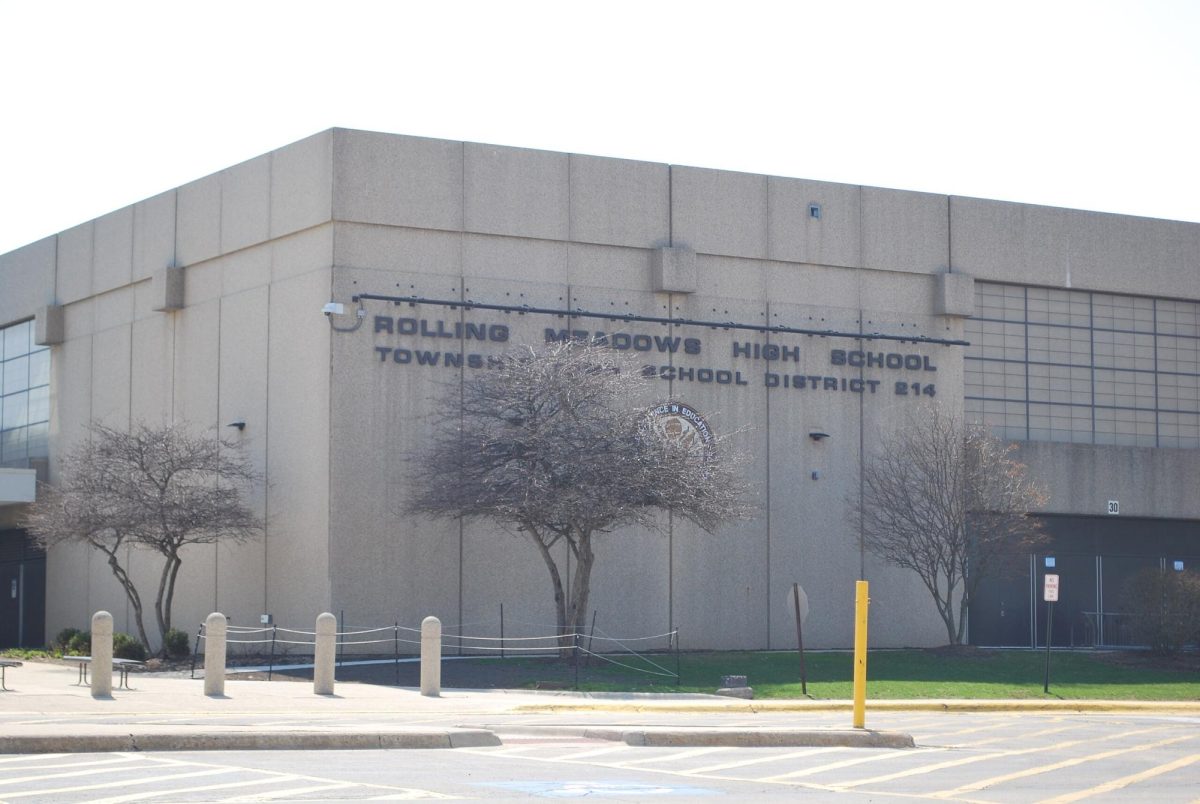
How Rolling Meadows High School’s Environment Impacts Students and Staff
At Rolling Meadows High School, the environment is more than just classrooms and hallways. It shapes how students feel throughout the day and how teachers do their jobs. From both student and staff perspectives, one thing is clear: RMHS has a strong sense of community and care, but the building itself — and the pressure that comes with school — can make daily life harder or easier depending on the space.
Light, Space, and the Problem With No Windows
Many teachers said the physical space strongly affects their mood and teaching. art teacher Martha Nava said her classroom setup is essential to her energy.
“I love the windows and open spaces in my classroom,” Nava said. “I need the windows, the plants, the light for inspiration.”
She added that while some students struggle with open layouts, most appear comfortable and engaged.
Orchestra director Kevin Carroll echoed that sentiment about his newly renovated room, calling it “bright, modern, and enjoyable.” He said having a space students actually want to be in changes the tone of the entire class.
Students, however, were far more critical — especially of rooms without windows. Maria Duffer, a senior, did not hold back.
“There’s no windows. Anywhere,” Duffer said. “So I’m just unmotivated because I feel like I’m learning in a dungeon.”
Rayli DeVore, also a senior, agreed, saying windowless rooms drain her energy and make school feel exhausting.
Teachers noticed the issue as well. Kathy Garrison, a science teacher, said, “We do have a lot of interior rooms, and it’s hard not to see the sun all day.”
Across the board, students and staff agreed that natural light, plants and open spaces matter.
Comfort Matters More Than People Think
Students frequently mentioned comfort and how it affects their ability to focus. Mary Linker, a senior, said working on couches outside her AP Psychology class “definitely makes me do my work more because I’m comfortable.”
Elisabeth Bolf, also a senior, generally liked the school’s spaces but said areas like the learning commons feel “bland” and “kind of make me sad.”
Older furniture was a common complaint. Duffer joked that some desks look like they are from “1930” and said it is frustrating to be stuck in a seat that does not work for everyone. Teachers noticed this as well. Eric Rosenwald, a mathematics teacher, said the outdated desks make it harder for students to feel relaxed or focused.
Caitlyn Walsh suggested adding more intentional student spaces, such as lounges or conference rooms, to give students better places to work and collaborate.
A Strong Community Makes a Big Difference
Despite the physical challenges, teachers consistently praised the culture at RMHS. Rosenwald described the school as a team effort.
“It takes a village,” he said. “I love this building and all it provides for me to be an effective teacher.”
He also compared the layout to a college campus, with open areas where students can study, relax or socialize.
History teacher Sean Benka emphasized the importance of collaboration and trust, saying that seeing students work together brings energy into the building. He believes strong relationships help students manage stress and actually use the support systems available to them.
Students echoed those feelings. Bolf said having good relationships with teachers makes her “want to go more because it feels like I owe it to them.” Linker added that teachers who are enthusiastic and care about her life outside of school make classes more enjoyable.
On the other hand, when those relationships are missing, students notice. DeVore said some teachers put too much pressure on students, which hurts her motivation. Duffer summed it up bluntly.
“The good teachers — I love going to their classes,” she said. “But most of them are just bots.”
Stress, Sleep, and Trying to Keep Up
Academic pressure came up repeatedly. DeVore described how overwhelming it feels to balance assignments and extracurriculars, questioning why that level of stress is so normalized. Linker said juggling AP classes and sports cuts into her sleep, which only adds more stress.
Teachers see those effects and believe the environment could help. Nava said better use of space, along with more light and greenery, could support student mental health, but students need guidance on how to use those spaces effectively.
Why Students Actually Come to School
When it comes to motivation, teachers said it is complicated. Carroll pointed to phones as a major distraction but believes feeling a sense of belonging matters most. His orchestra motto, “We Get to Do This,” reflects that mindset.
Students made it even simpler. Nearly all said the main reason they come to school is their friends.
“My friends,” Linker said. “Being able to talk to them, hang out with them and make memories.”
What Everyone Agrees Would Help
Across all interviews, students and teachers repeatedly returned to the same ideas:
-
More windows and natural light
-
More plants and green spaces
-
Updated, comfortable furniture
-
Flexible, student-centered work areas
-
Spaces that feel modern, welcoming and alive
In the end, RMHS is not just a place for learning — it is a place that shapes how people feel about themselves and each other. As Carroll said, it is a place where “we get to do this.” And for students, the environment often determines whether they actually want to.